


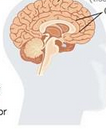
An interesting article came out this week regarding concussions that could help student and professional athletes: a brain-scanning technique might one day help identify people with a disease linked to concussions in football and other sports, an illness that is now diagnosed only after death.
Using the scans of 14 retired football players at risk for the condition, called CTE (Chronic Traumatic Encephalopathy), it was revealed that their scans showed a pattern of deposits of abnormal protein. For the study, the subjects were injected with a substance that binds to deposits of an abnormal protein found in CTE and makes them visible on a PET scan. The resulting PET images differed from results with 28 healthy people and 24 people with Alzheimer's disease, a condition that can resemble CTE in its symptoms.
CTE causes progressive brain degeneration in athletes and others who've had repeated concussions and other blows to the head. Symptoms include memory loss, confusion, aggression, depression and more.
This is huge news because, while there is no cure, the brain-scanning approach raises the possibility of detecting the disease early on, when the chances would be greatest for success of experimental treatments. It could also help athletes decide when would be a good time to retire, especially if they became more susceptible to concussion with continued play.
The results of the study were presented in a paper in the Proceedings of the National Academy of Sciences.
ConcussedTeen.Org is YOUR website. We want to hear from you so we can work together to educate people so teenage athletes are protected. Email submissions@concussedteen.org with your story.
